











Both the DW5 and DW7 support AC induction motors, permanent magnet synchronous motors (PMSM), and serial/CAN communication. Their main differences lie in overall dimensions, available output current ratings, and feedback interfaces.
The DW7 additionally supports resolver feedback, making it suitable for motor systems that use resolver-based position feedback.
The DW5 and DW7 are available in 48V, 72V, and 80V configurations, with different output current ratings available for each voltage platform. OEMs can select the appropriate model based on motor power, continuous current, and peak current requirements.
The M4S features a solid capacitor design and direct-connection topology, optimized for improved system reliability, simplified electrical connections, and seamless vehicle integration. It is well suited for golf cart platforms that require long-term operational stability and ease of maintenance.
Yes. The M4S is available in 48V, 60V, and 72V configurations, with multiple output current ratings to choose from.
The appropriate controller specification can be selected based on passenger capacity, acceleration performance, hill-climbing capability, and continuous driving requirements.
The M4S supports AC induction motors (ACIM), permanent magnet synchronous motors (PMSM), and brushless DC motors (BLDC).
Its compatibility with multiple motor types gives golf cart OEMs greater flexibility in selecting drive systems based on efficiency, cost, and power performance requirements.
Selecting a golf cart motor controller primarily depends on battery voltage, motor type, power performance, and communication interfaces.
The M4S is specifically designed for golf cart applications. The A2P/A2E and A4P/A4E series are also suitable for golf carts and sightseeing vehicles. The appropriate solution can be selected based on motor power requirements and available installation space.
To reduce failures, ensure that the controller's current ratings are properly matched to the brush and vacuum motors, and configure appropriate start/stop sequences and overcurrent protection settings.
For routine maintenance, regularly inspect the battery and electrical connectors, and promptly address issues such as motor stalling, vacuum system blockages, and moisture ingress in wiring harnesses.
Yes. Our controllers can be adapted to the vehicle's existing electrical system. Before replacement, compatibility must be verified for the brush and vacuum motor voltage and current ratings, control signals, communication protocols, connectors, and mounting dimensions.
Once the wiring is properly configured and functional commissioning is completed, the controller can be integrated into the corresponding vehicle model.
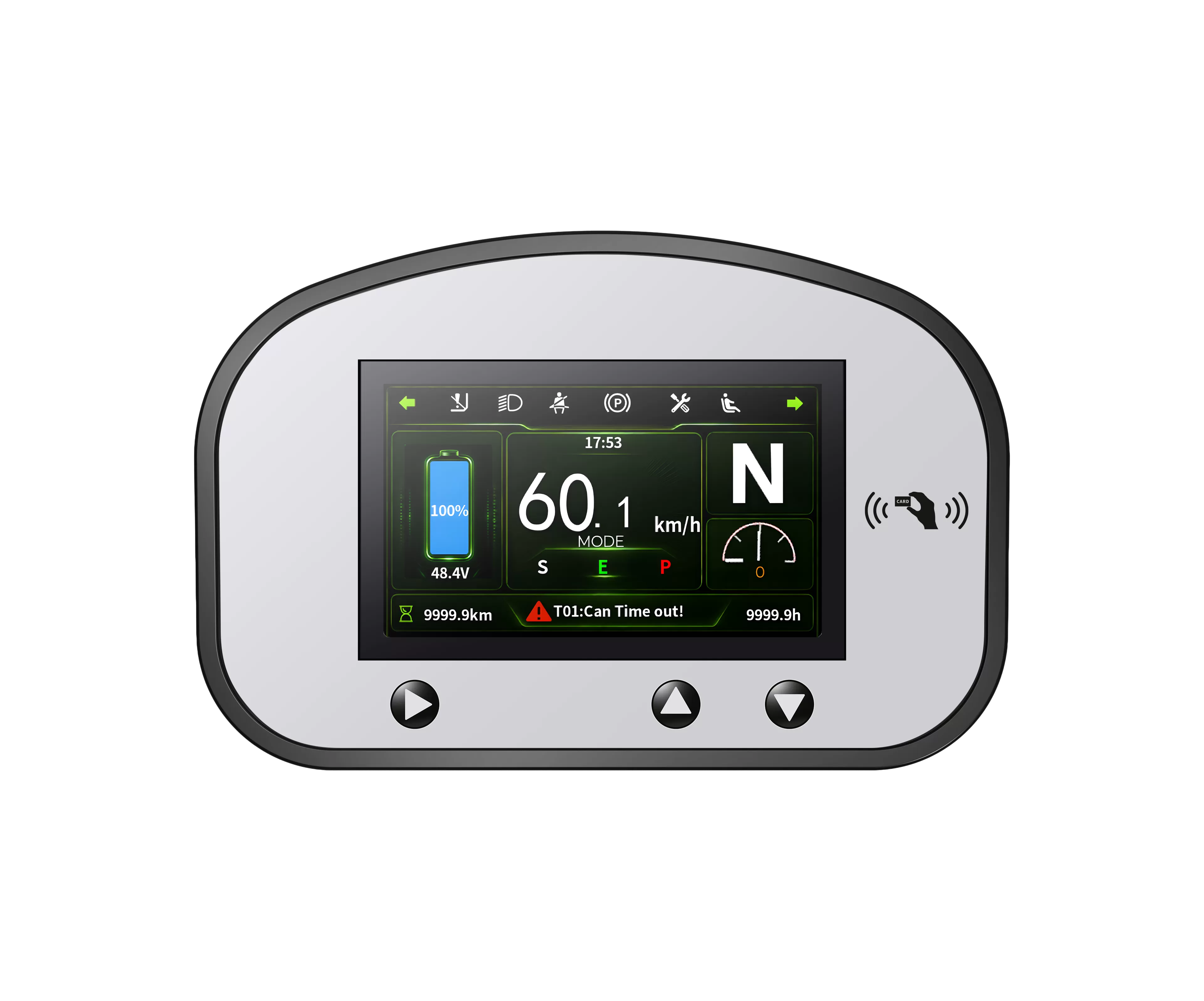
The choice depends on the communication architecture between the display and the vehicle's main controller.
The XD2 and XD240 support serial communication, the XD2C is designed for CAN communication, and the XD2S supports both serial and CAN communication.
These models offer flexible options to accommodate different vehicle electrical architectures and communication requirements.
From product selection to production line operation, we provide end-to-end support through on-site operational guidance and comprehensive after-sales technical assistance.